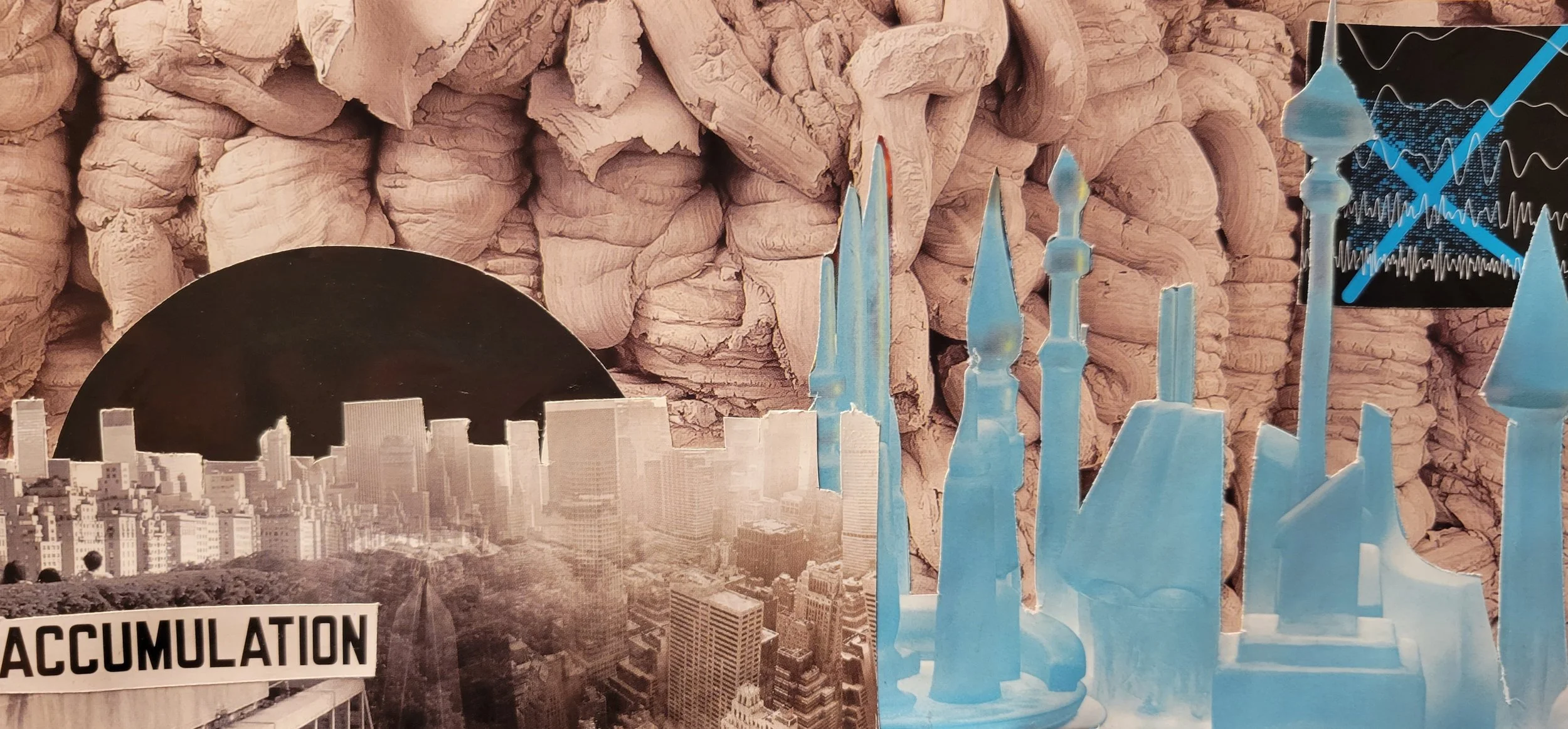
week 12
Click ‘read more’ to see full image
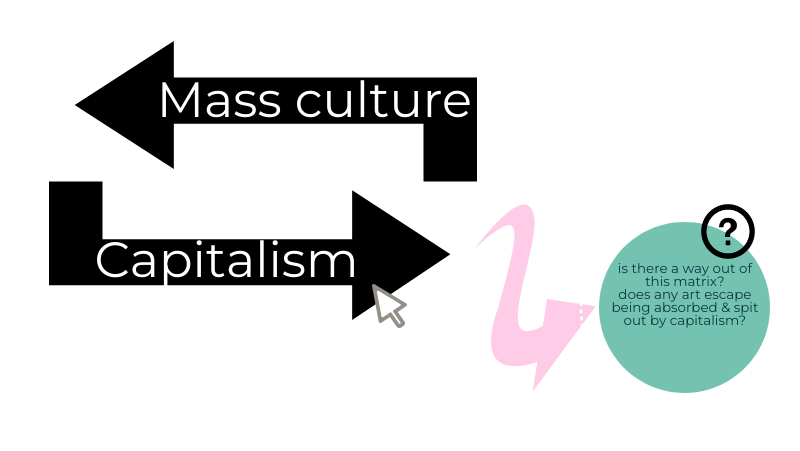
“it is the reflection of a profound reality; it masks and denatures a profound reality; it masks the absence of a profound reality; it has no relation to any reality whatsoever: it is its own pure simulacrum.” - (Baudrillard, 1994)
“it is the reflection of a profound reality; it masks and denatures a profound reality; it masks the absence of a profound reality; it has no relation to any reality whatsoever: it is its own pure simulacrum.” - (Baudrillard, 1994)
week 11
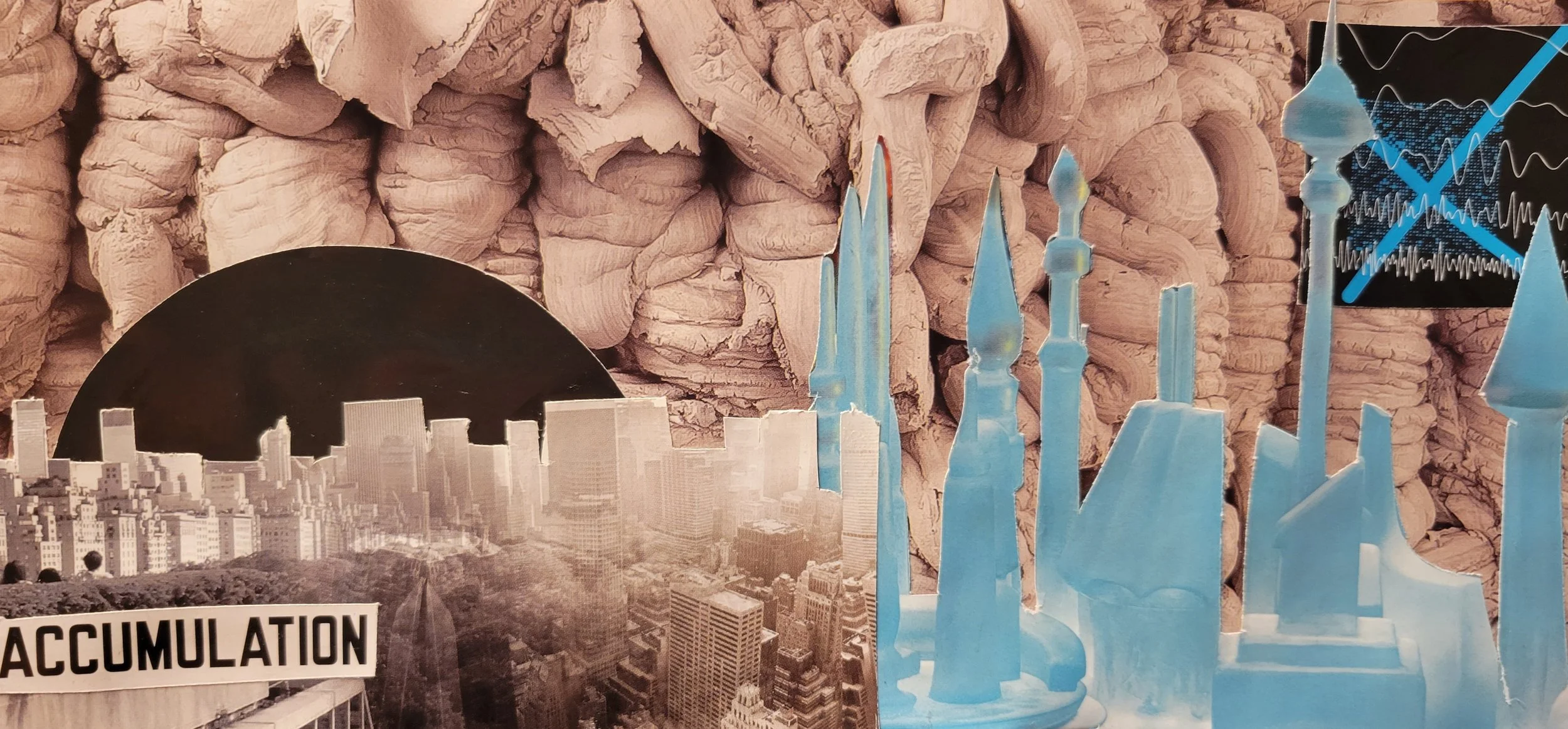
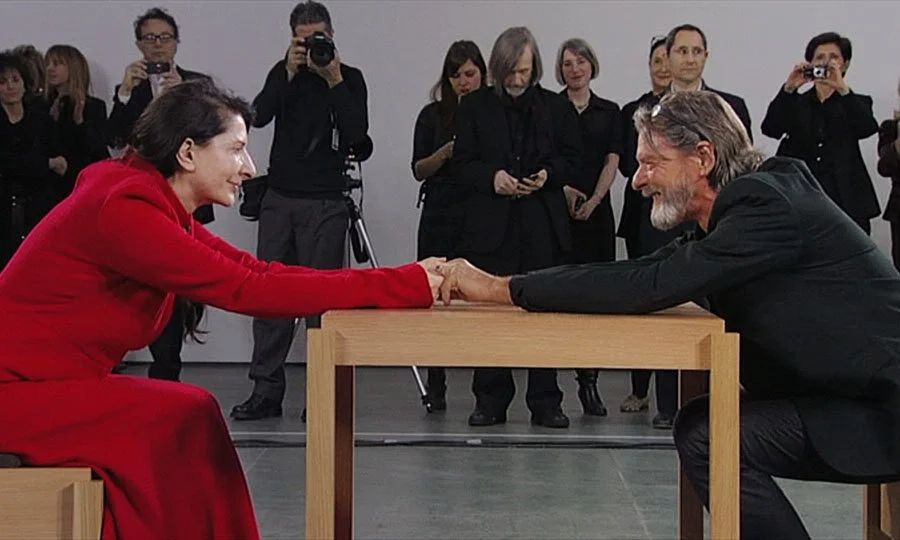
memes! (Click READ MORE to view)
My first meme is in response to “Some Thoughts on Performance and Materiality” by Nina Horisaki-Christens, as I was thinking about our increasingly mediatized experiences and how it’s become blurrier to distinguish between experiences with media and experiences in the material world.
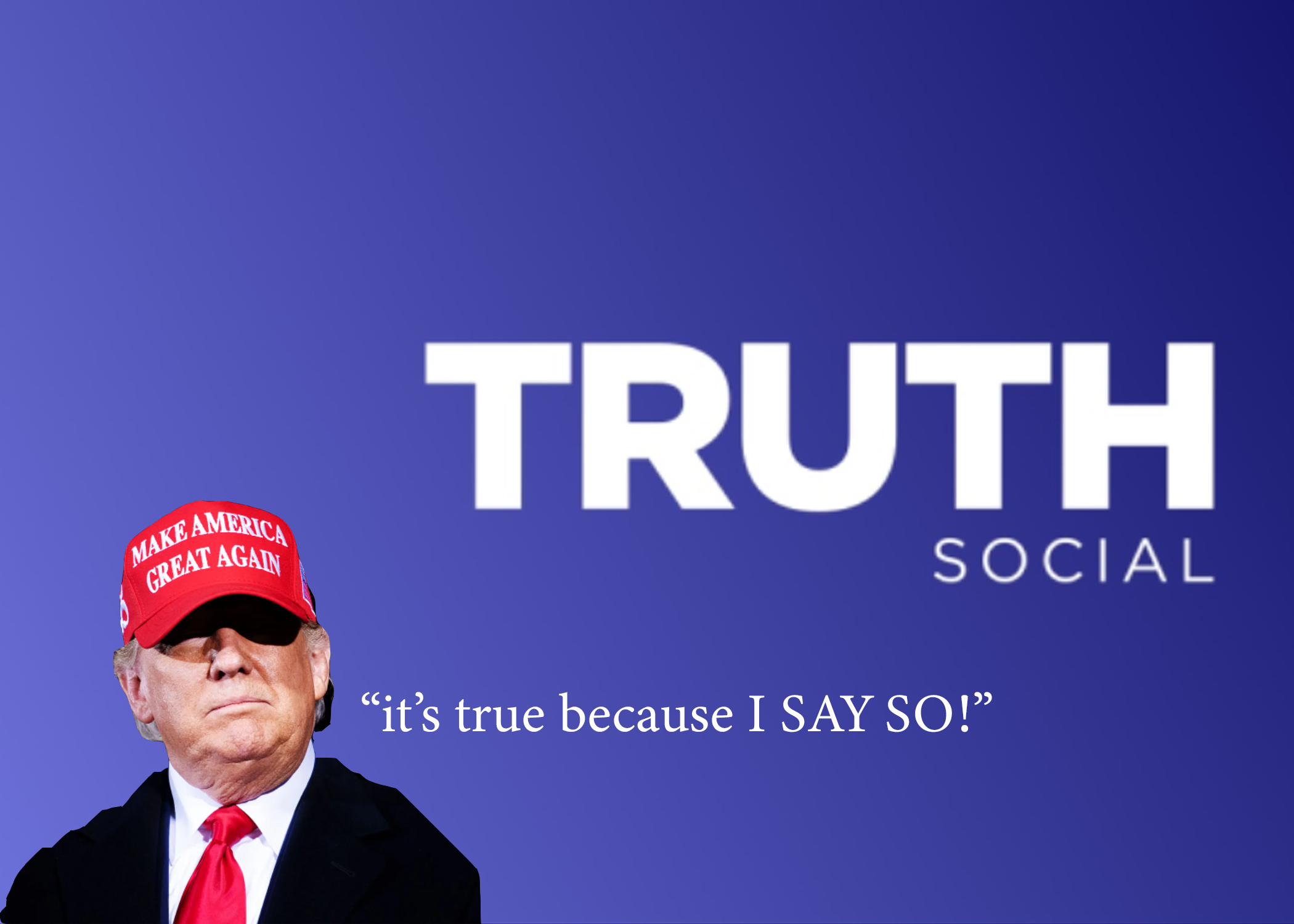
My second meme refers to “Simulacra in the Age of Social Media: Baudrillard as the Prophet of Fake News” by James Morris. I wanted to make something about Trump and fake news, particularly his somewhat failed social media platform “TRUTH social” to comment on this direct invocation of the idea of truth being whatever feels best to people rather than what it empirically “true”.
memes!
My first meme is in response to “Some Thoughts on Performance and Materiality” by Nina Horisaki-Christens, as I was thinking about our increasingly mediatized experiences and how it’s become blurrier to distinguish between experiences with media and experiences in the material world.
My second meme refers to “Simulacra in the Age of Social Media: Baudrillard as the Prophet of Fake News” by James Morris. I wanted to make something about Trump and fake news, particularly his somewhat failed social media platform “TRUTH social” to comment on this direct invocation of the idea of truth being whatever feels best to people rather than what it empirically “true”.
Week 10
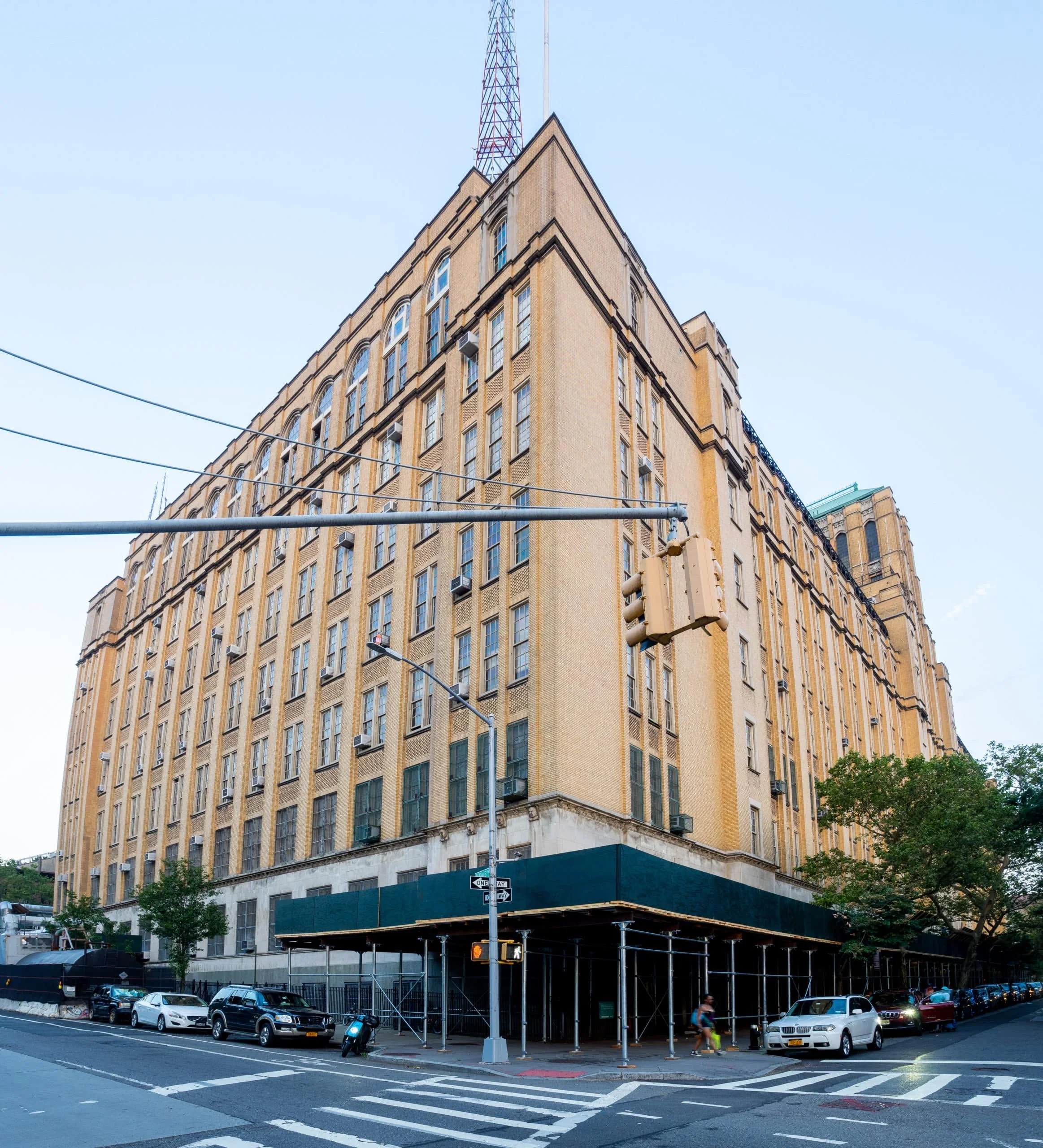
In the student film Broken Tech, filmmaker Eva Tikhomirova makes the argument that Brooklyn Tech High School has a culture of high pressure and poor student mental health. Through student, teacher, and counselor interviews, she demonstrates the disconnect between definitions of mental health at the school and the ways students are or are not supported. Many students identify themselves as struggling with mental health, especially depression and anxiety, and they discuss the ways this reality impacts their experiences at school. It also explores the hypocrisy of the way the school presents itself as one of the best in the city while many of its students are struggling mentally and emotionally. Tikhomirova cleverly juxtaposes different snippets of conversation to create interesting narratives and also to provide contrast between different ideas. She also demonstrates how many adults at the school are ill-equipped to understand and support the students who are experiencing poor mental health. By making this a predominantly interview-based documentary, the filmmaker centers the perspectives and voices of the subjects, especially students. The argument is valid and well-argued, and it offers viewers the chance to understand what students at Brooklyn Tech are going through.
In the student film Broken Tech, filmmaker Eva Tikhomirova makes the argument that Brooklyn Tech High School has a culture of high pressure and poor student mental health. Through student, teacher, and counselor interviews, she demonstrates the disconnect between definitions of mental health at the school and the ways students are or are not supported. Many students identify themselves as struggling with mental health, especially depression and anxiety, and they discuss the ways this reality impacts their experiences at school. It also explores the hypocrisy of the way the school presents itself as one of the best in the city while many of its students are struggling mentally and emotionally. Tikhomirova cleverly juxtaposes different snippets of conversation to create interesting narratives and also to provide contrast between different ideas. She also demonstrates how many adults at the school are ill-equipped to understand and support the students who are experiencing poor mental health. By making this a predominantly interview-based documentary, the filmmaker centers the perspectives and voices of the subjects, especially students. The argument is valid and well-argued, and it offers viewers the chance to understand what students at Brooklyn Tech are going through.
week 9
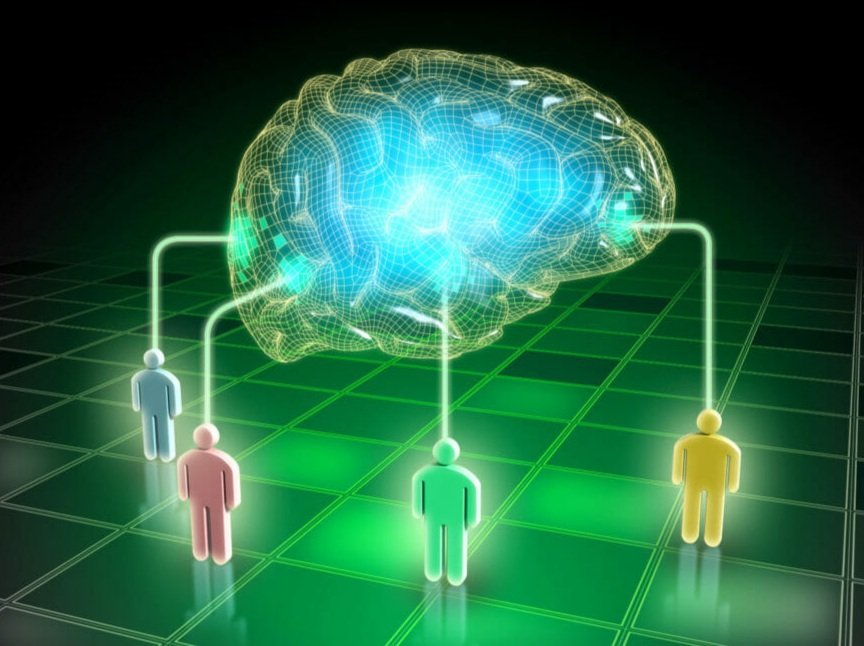
This week’s readings emphasize the importance of the media literacy skill ‘Collective Intelligence’, defined as the ability to pool knowledge and compare notes with others toward a common goal. This skill allows for a social production of knowledge, and emphasizes that everybody knows something that they can share and build from. Collective Intelligence in the classroom can help disrupt hierarchies of banking education where only the teacher is seen as having valuable knowledge, and encouraging students to also be leaders and share the things they know and care about. Using collective intelligence skills can also encourage students to work collaboratively and feel like they have more ownership of the work that they do in class. Lastly, it encourages students to work across disciplines and types of knowledge, allowing them to understand multiple intelligences and to be able to synthesize information towards a goal.
This week’s readings emphasize the importance of the media literacy skill ‘Collective Intelligence’, defined as the ability to pool knowledge and compare notes with others toward a common goal. This skill allows for a social production of knowledge, and emphasizes that everybody knows something that they can share and build from. Collective Intelligence in the classroom can help disrupt hierarchies of banking education where only the teacher is seen as having valuable knowledge, and encouraging students to also be leaders and share the things they know and care about. Using collective intelligence skills can also encourage students to work collaboratively and feel like they have more ownership of the work that they do in class. Lastly, it encourages students to work across disciplines and types of knowledge, allowing them to understand multiple intelligences and to be able to synthesize information towards a goal.
week 8
This week’s readings/viewings reflected the power of play, and highlighted the ways in which gaming is a medium that can be brought into the classroom to help students build skills such as collaboration, problem-solving, and perspective-taking among others. Gaming (when scaffolded correctly) can also help push higher-level thinking, and encourage students to think on a systems level. With proper context and structured exploration, games provide very dynamic and engaging entry points into core topics and themes, and can also encourage students to think from a place of (simulated) experience.
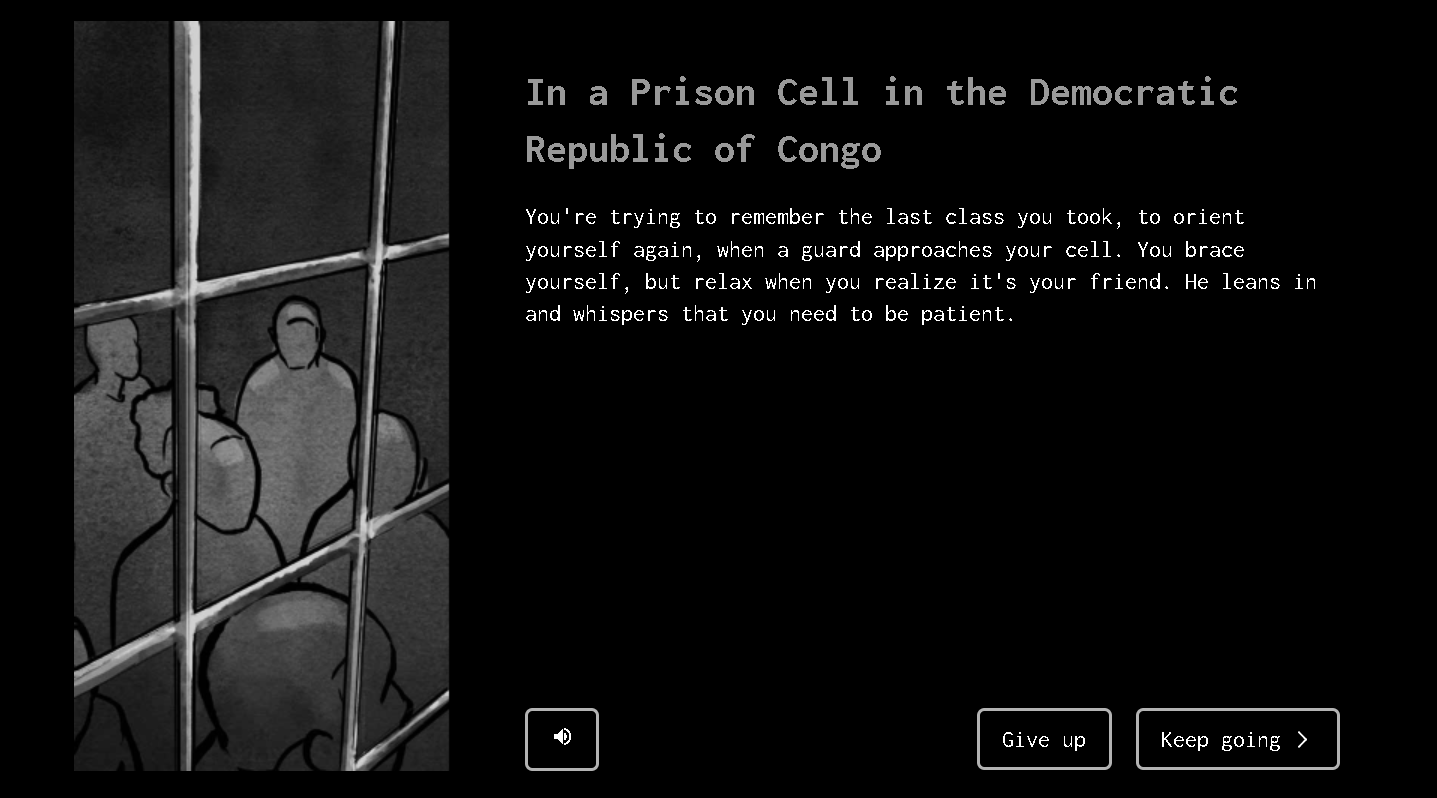
While reading, I was reminded of “The Waiting Game”, which is a journalistic project produced by ProPublica that simulates the experience of attempting to seek asylum in the United States. It’s an incredibly powerful game that uses storytelling in a really unique way to explore asylum, and the form of the game itself reflects aspects of asylum-seekers' experiences - it starts with the warning “Have patience. You’ll need lots of it to play the game”. In order to progress through the game, you need to spend a very long time clicking through it and attempting to endure every day through the process of trying to seek asylum. You’re only given two options the whole game - to Give Up, or Keep Going. I imagine that this could become a very powerful tool to use in the classroom as one way to explore asylum with students. This lesson plan from Re-Imagining Migration offers suggestions for how to engage with the game.
Another game that focuses on migration is called Borders, described as “a political art game created to not only to exhibit video games as an art form but to portray the dangers Mexican immigrants face crossing the border. Players attempt to cross the border while avoiding La Migra (border patrol) and staying hydrated. The place where every player dies is permanently recorded into the video game’s world, represented by a skeleton. Players can see the skeletons of past players which communicates the large death toll of the Mexican Desert.” The aesthetic experience of this game alone offers a really impactful way to reflect on border crossing, and could again be used as an interesting entry point to use with students if they’re learning about immigration & migration.
Lastly, I was also reminded of a project in Chicago called The Plug-in Studio: “The Plug-In Studio is a socially engaged new media artist collective. We collaborate with youth and families in diverse Chicago communities to make video games, interactive kinetic sculpture, augmented reality graffiti, soft circuits and other art with technology. Our projects incorporate programming, engineering, and design in a critical context.” One of their projects, The Street Arcade, invited teens to develop video games that focused on issues impacting their communities. These games were then featured in an outdoor arcade in Hyde Park where people could come and play them, as well as talk to the youth artists who developed the games. By creating these games, students had to think creatively about their topics and find new perspectives to explore and ways to approach complex ideas. They then also had the opportunity to explain these games and their thinking to other people, creating space for rich dialogue about their issues.
This week’s readings/viewings reflected the power of play, and highlighted the ways in which gaming is a medium that can be brought into the classroom to help students build skills such as collaboration, problem-solving, and perspective-taking among others. Gaming (when scaffolded correctly) can also help push higher-level thinking, and encourage students to think on a systems level. With proper context and structured exploration, games provide very dynamic and engaging entry points into core topics and themes, and can also encourage students to think from a place of (simulated) experience.
While reading, I was reminded of “The Waiting Game”, which is a journalistic project produced by ProPublica that simulates the experience of attempting to seek asylum in the United States. It’s an incredibly powerful game that uses storytelling in a really unique way to explore asylum, and the form of the game itself reflects aspects of asylum-seekers' experiences - it starts with the warning “Have patience. You’ll need lots of it to play the game”. In order to progress through the game, you need to spend a very long time clicking through it and attempting to endure every day through the process of trying to seek asylum. You’re only given two options the whole game - to Give Up, or Keep Going. I imagine that this could become a very powerful tool to use in the classroom as one way to explore asylum with students. This lesson plan from Re-Imagining Migration offers suggestions for how to engage with the game.
Another game that focuses on migration is called Borders, described as “a political art game created to not only to exhibit video games as an art form but to portray the dangers Mexican immigrants face crossing the border. Players attempt to cross the border while avoiding La Migra (border patrol) and staying hydrated. The place where every player dies is permanently recorded into the video game’s world, represented by a skeleton. Players can see the skeletons of past players which communicates the large death toll of the Mexican Desert.” The aesthetic experience of this game alone offers a really impactful way to reflect on border crossing, and could again be used as an interesting entrypoint to use with students if they’re learning about immigration & migration.
Lastly, I was also reminded of a project in Chicago called The Plug-in Studio: “The Plug-In Studio is a socially engaged new media artist collective. We collaborate with youth and families in diverse Chicago communities to make video games, interactive kinetic sculpture, augmented reality graffiti, soft circuits and other art with technology. Our projects incorporate programming, engineering, and design in a critical context.” One of their projects, The Street Arcade, invited teens to develop video games that focused on issues impacting their communities. These games were then featured in an outdoor arcade in Hyde Park where people could come and play them, as well as talk to the youth artists who developed the games. By creating these games, students had to think creatively about their topics and find new perspectives to explore and ways to approach complex ideas. They then also had the opportunity to explain these games and their thinking to other people, creating space for rich dialogue about their issues.
week 7
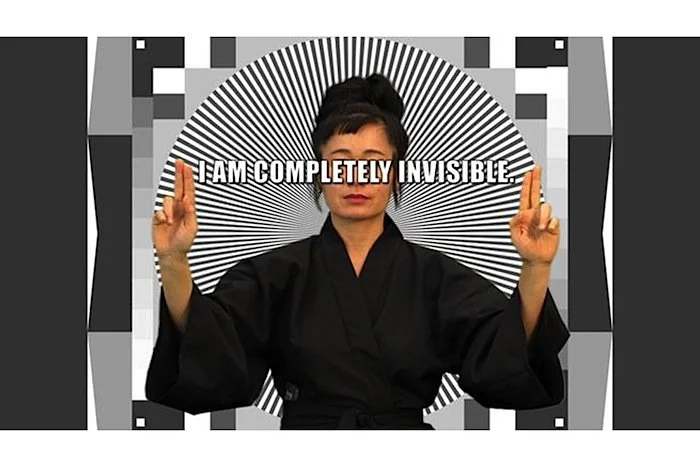
My biggest takeaway from the week is that the ways that we look at and see the world are always already mediated by invisible structures. Our gaze is always being guided invisibly - where to go, how to see, what to look at etc as Kevin Tavin reminds us. Artist Jiabao Li describes this as being like wearing glasses - after a while we are used to them, comfortable, and may even forget they are there even though they alter the way we see the world. I liked how she referred to her artistic interventions as ways to make people aware of these mediated lenses, like when a scuff appears or dirt gets on the glasses lenses. Her talk, along with reading Hito Steyerl’s interview, drove home the point of how Important it is to incorporate contemporary artists into our art teaching practice in order to help push students' thinking and help them understand how they can create things to respond to the world around them. These artists model different modes of creating and thinking about visual culture and how it relates to our lives. This mediation is of course not a neutral phenomenon but deeply tied up in power and politics. Kevin Tavin quotes Donna Haraway: “the visual is always a question of the power to see and perhaps of the violence implicit in our visualizing practices”.
My biggest takeaway from the week is that the ways that we look at and see the world are always already mediated by invisible structures. Our gaze is always being guided invisibly - where to go, how to see, what to look at etc as Kevin Tavin reminds us. Artist Jiabao Li describes this as being like wearing glasses - after a while we are used to them, comfortable, and may even forget they are there even though they alter the way we see the world. I liked how she referred to her artistic interventions as ways to make people aware of these mediated lenses, like when a scuff appears or dirt gets on the glasses lenses. Her talk, along with reading Hito Steyerl’s interview, drove home the point of how Important it is to incorporate contemporary artists into our art teaching practice in order to help push students' thinking and help them understand how they can create things to respond to the world around them. These artists model different modes of creating and thinking about visual culture and how it relates to our lives. This mediation is of course not a neutral phenomenon but deeply tied up in power and politics. Kevin Tavin quotes Donna Haraway: “the visual is always a question of the power to see and perhaps of the violence implicit in our visualizing practices”.
week 6
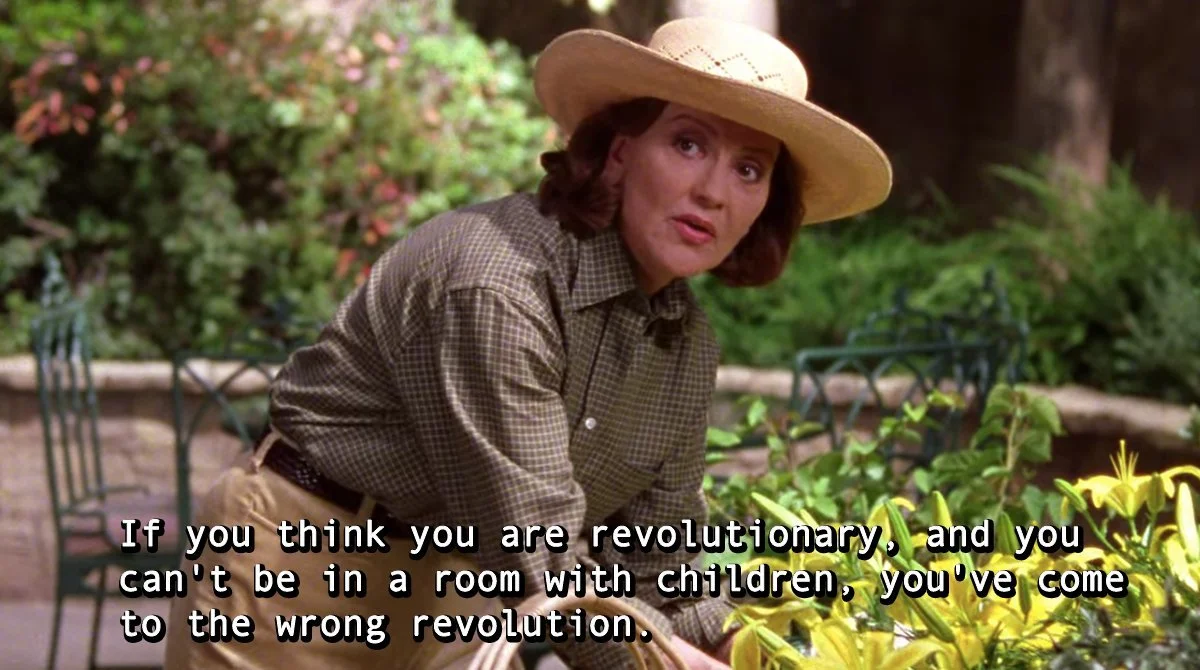
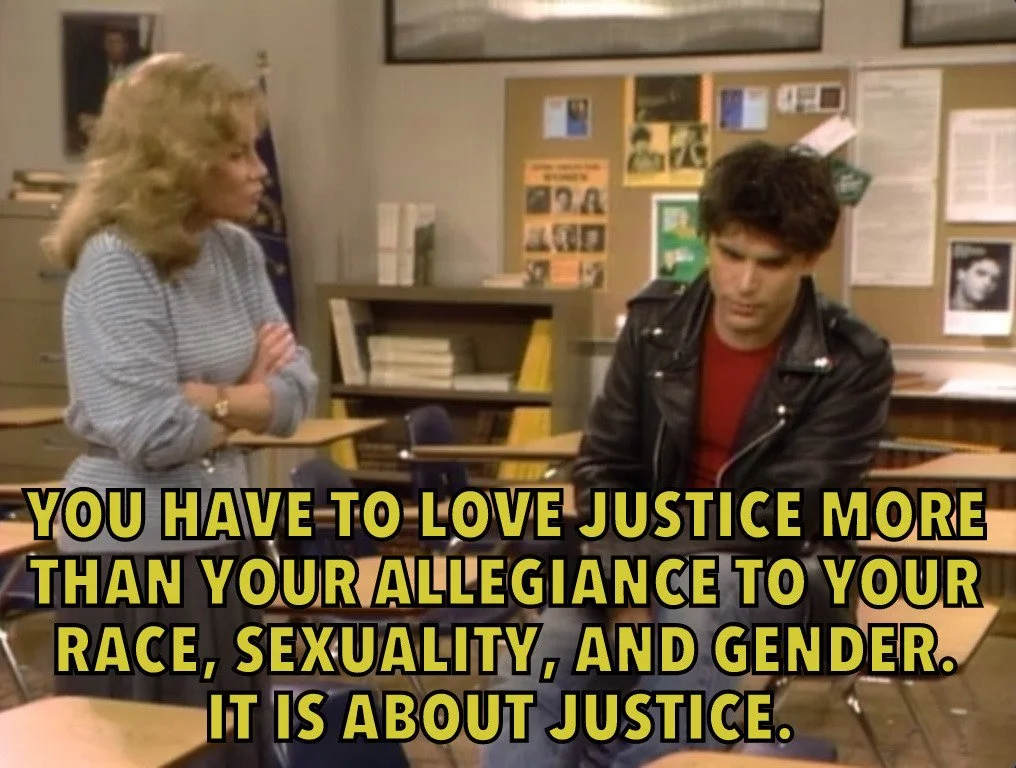
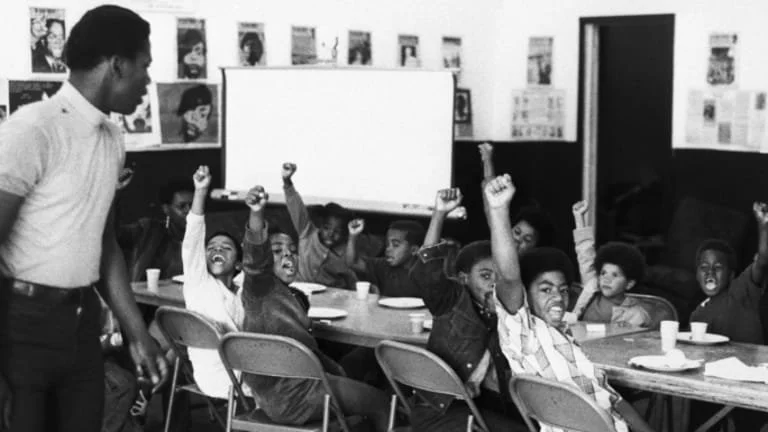
I’m inspired by the ways bell hooks frames education in Teaching to Transgress, and as an educator I hope to continue working towards the goal of making the classroom a liberatory space, where the emphasis is on students well-being and their capacity for growth. Reflecting on bell hooks, I was reminded of the incredible Tumblr page “Saved by the bell hooks” which juxtaposes quotes from hooks with screenshots from Saved by the Bell: https://savedbythe-bellhooks.tumblr.com/
My cover image for the week is from a twitter page with a similar structure, “Ruth Wilson Gilmore Girls”: https://twitter.com/rwgilmoregirls?ref_src=twsrc%5Egoogle%7Ctwcamp%5Eserp%7Ctwgr%5Eauthor
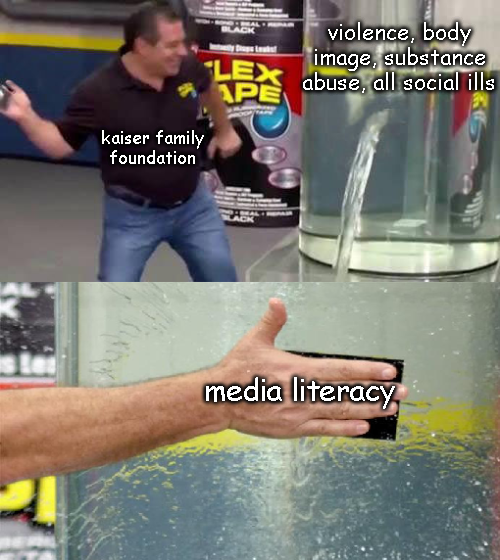
My meme below addresses the fact sheet published by the Kaiser Family Foundation, which I thought exaggerated the role of media literacy in solving massive social ills like violence & aggression, substance abuse, and body image. I was frustrated with the paragraph on violence, which seemed to imply that “high-risk” youth (haaate that language) caught up in the juvenile (in)justice system simply need help with their “decision-making skills,” implying that these young people are individually at fault because they are inherently more prone to crime and all they need is to understand how to make good decisions.
Reminds me how important it is to always situate thinking within a structural lens of oppression. Like okay sure, media literacy is good and can definitely help empower youth to understand themselves and their worlds, but the only solutions that will actually truly address harm are ones that address social needs like poverty, housing, education system etc etc. Media literacy helps shape our thinking, but that thinking also needs to lead us to reshape our material world.
I’m inspired by the ways bell hooks frames education in Teaching to Transgress, and as an educator I hope to continue working towards the goal of making the classroom a liberatory space, where the emphasis is on students well-being and their capacity for growth. Reflecting on bell hooks, I was reminded of the incredible Tumblr page “Saved by the bell hooks” which juxtaposes quotes from hooks with screenshots from Saved by the Bell: https://savedbythe-bellhooks.tumblr.com/
My cover image for the week is from a twitter page with a similar structure, “Ruth Wilson Gilmore Girls”: https://twitter.com/rwgilmoregirls?ref_src=twsrc%5Egoogle%7Ctwcamp%5Eserp%7Ctwgr%5Eauthor
My meme below addresses the fact sheet published by the Kaiser Family Foundation, which I thought exaggerated the role of media literacy in solving massive social ills like violence & aggression, substance abuse, and body image. I was frustrated with the paragraph on violence, which seemed to imply that “high-risk” youth (haaate that language) caught up in the juvenile (in)justice system simply need help with their “decision-making skills,” implying that these young people are individually at fault because they are inherently more prone to crime and all they need is to understand how to make good decisions.
Reminds me how important it is to always situate thinking within a structural lens of oppression. Like okay sure, media literacy is good and can definitely help empower youth to understand themselves and their worlds, but the only solutions that will actually truly address harm are ones that address social needs like poverty, housing, education system etc etc. Media literacy helps shape our thinking, but that thinking also needs to lead us to reshape our material world.
week 5
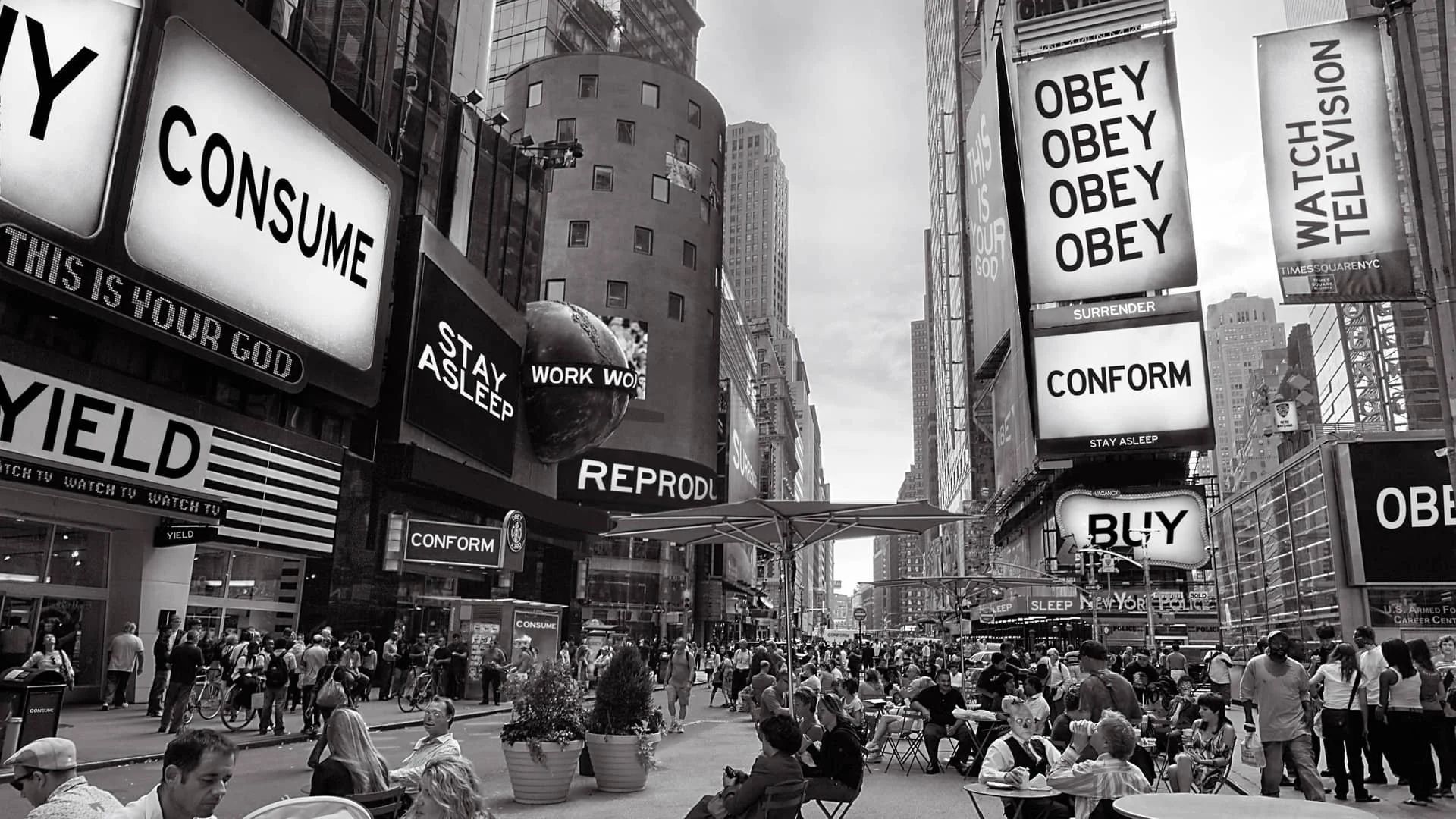
In the interview with Henry Giroux, Giroux talks about how dominant, traditional education kills imagination and limits student agency - for ex. teaching to the test. He calls this kind of teaching a “pedagogy of repression,” and he sees education as a major site of struggle. He declares further, “education [is] a struggle over what kind of future we want for young people.” It made me think about how the ideal future I want for my students is one of freedom from oppression & domination. I appreciate and agree with his claim that education is at the center of every struggle for democracy, and that democracy is an ongoing process which requires constant struggle [makes me think of Angela Davis’ notion that freedom is a constant struggle].
Given that capitalism is the antithesis of democracy, I’m glad to be in this program where we are given the space to think deeply about how we as educators can work against capitalism where possible & the structures of oppression that we exist in, and create the space for our students to both understand these systems and seek to change them (ideally to more liberatory ends..).
Giroux also considers the way that normative/traditional education is sometimes masked as being ‘neutral,’ which leaves no one accountable and obscures the way that oppressive power functions - “power at its worst is invisible.” Hearing Giroux speak also reminds me of the power we each have as educators to intervene in and develop the political consciousness of young people.
From the Foucault reading, I found these concluding questions to be important to note: “New questions will be heard: 'What are the modes of existence of this discourse?' 'Where does it come from; how is it circulated; who controls it?' 'What placements are determined for possible subjects?' 'Who can fulfill these diverse functions of the subject?' Behind all these questions we would hear little more than the murmur of indifference: 'What matter who's speaking?’”
In the interview with Henry Giroux, Giroux talks about how dominant, traditional education kills imagination and limits student agency - for ex. teaching to the test. He calls this kind of teaching a “pedagogy of repression,” and he sees education as a major site of struggle. He declares further, “education [is] a struggle over what kind of future we want for young people.” It made me think about how the ideal future I want for my students is one of freedom from oppression & domination. I appreciate and agree with his claim that education is at the center of every struggle for democracy, and that democracy is an ongoing process which requires constant struggle [makes me think of Angela Davis’ notion that freedom is a constant struggle].
Given that capitalism is the antithesis of democracy, I’m glad to be in this program where we are given the space to think deeply about how we as educators can work against capitalism where possible & the structures of oppression that we exist in, and create the space for our students to both understand these systems and seek to change them (ideally to more liberatory ends..).
Giroux also considers the way that normative/traditional education is sometimes masked as being ‘neutral,’ which leaves no one accountable and obscures the way that oppressive power functions - “power at its worst is invisible.” Hearing Giroux speak also reminds me of the power we each have as educators to intervene in and develop the political consciousness of young people.
From the Foucault reading, I found these concluding questions to be important to note: “New questions will be heard: 'What are the modes of existence of this discourse?' 'Where does it come from; how is it circulated; who controls it?' 'What placements are determined for possible subjects?' 'Who can fulfill these diverse functions of the subject?' Behind all these questions we would hear little more than the murmur of indifference: 'What matter who's speaking?’”
week 4
In Representation and the Media, Stuart Hall subverts the dominant understanding of representation as something which represents an essential and fixed idea. While he states that creating meaning depends on a certain kind of ‘fixing,’ he explains that there can always be many meanings and meanings may change over time. Hall argues that representation creates meaning “within the event”, and that meaning is constructed through shared conceptual maps - it is a relational and contextual process. Further, he states that the question of circulation of meaning always involves questions of power, and that the purpose of power is to fix meaning absolutely. Power and ideology are intent on closing language & closing meaning. This is important because Hall understands that images constantly construct us and create new subjectivities through this meaning-making process, so having narrow and essentialist images & representations restricts our abilities to be and to understand ourselves in relation to others.
I found Hall’s arguments about stereotypes really interesting - he used stereotypes as an example of a kind of fixed meaning system which is driven by ideology and power structures. He argues that rather than combat negative stereotypes with positive ones, it would be much more effective and powerful to explode the stereotypes by breaking them down and analyzing the process by which they are produced and reproduced. This is critical to consider as art educators, as we will regularly encounter stereotypes in the classroom - we are in a position to give students the critical tools to carefully consider stereotypes in order to try to figure out where they come from, whose interests they serve, who they oppress, and how they are upheld within dominant culture. This kind of analysis can help develop and sharpen students' critical thinking skills, which will serve them in all areas of their life.
In Representation and the Media, Stuart Hall subverts the dominant understanding of representation as something which represents an essential and fixed idea. While he states that creating meaning depends on a certain kind of ‘fixing,’ he explains that there can always be many meanings and meanings may change over time. Hall argues that representation creates meaning “within the event”, and that meaning is constructed through shared conceptual maps - it is a relational and contextual process. Further, he states that the question of circulation of meaning always involves questions of power, and that the purpose of power is to fix meaning absolutely. Power and ideology are intent on closing language & closing meaning. This is important because Hall understands that images constantly construct us and create new subjectivities through this meaning-making process, so having narrow and essentialist images & representations restricts our abilities to be and to understand ourselves in relation to others.
I found Hall’s arguments about stereotypes really interesting - he used stereotypes as an example of a kind of fixed meaning system which is driven by ideology and power structures. He argues that rather than combat negative stereotypes with positive ones, it would be much more effective and powerful to explode the stereotypes by breaking them down and analyzing the process by which they are produced and reproduced. This is critical to consider as art educators, as we will regularly encounter stereotypes in the classroom - we are in a position to give students the critical tools to carefully consider stereotypes in order to try to figure out where they come from, whose interests they serve, who they oppress, and how they are upheld within dominant culture. This kind of analysis can help develop and sharpen students' critical thinking skills, which will serve them in all areas of their life.
just a thing I saw on the subway today…
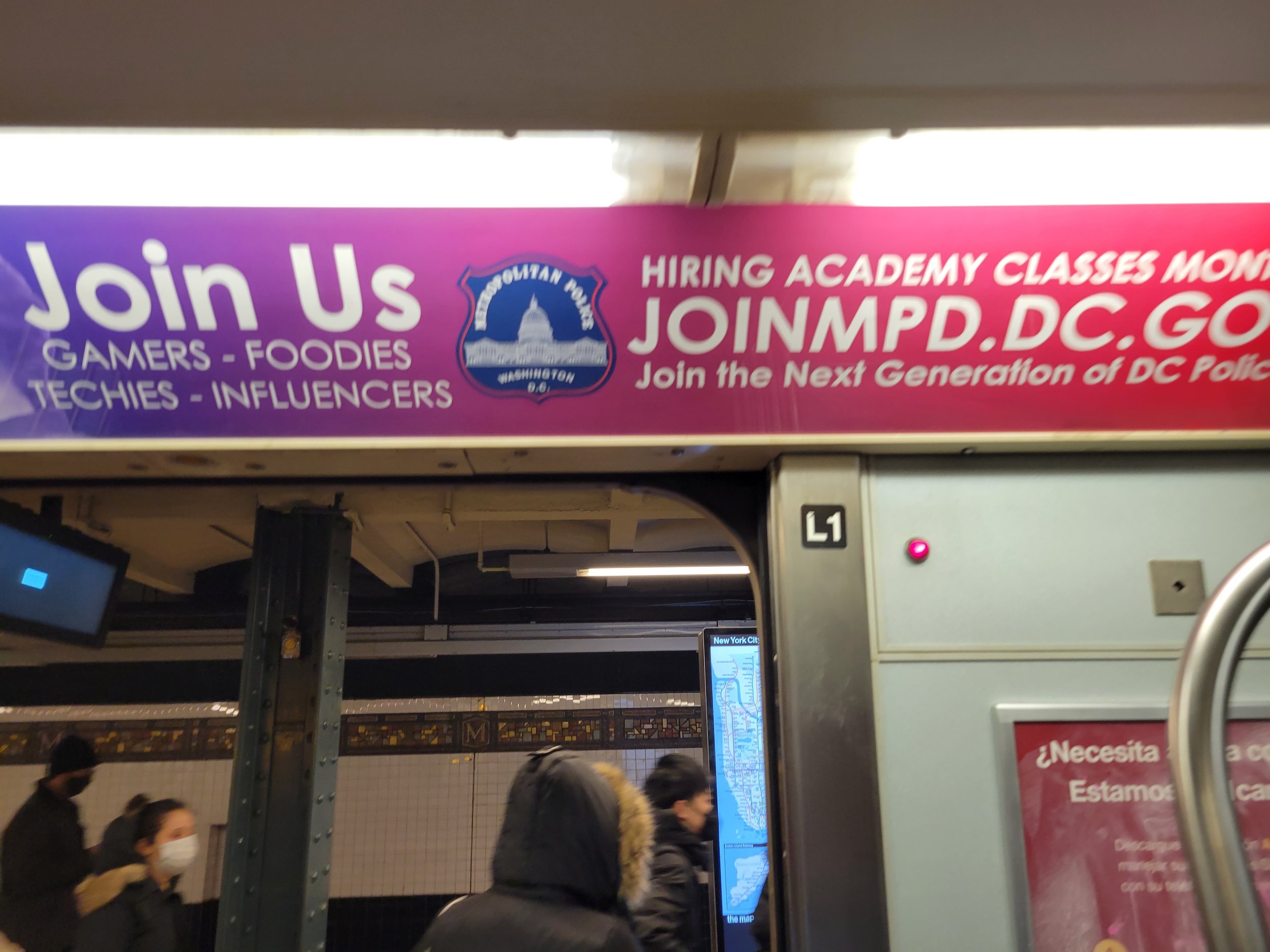
Wish I had snapped a better picture, but I was in a rush and I didn’t want anyone in the train car to think I was trying to become a police officer LOL. Fortunately, I found a better picture on the internet which I posted here. The ad calls for “gamers, foodies, techies and influencers” to join the DC police force. I guess it’s trying to create an image of the “everyman” kind of cop, and to make it seem like a fun and quirky thing to do to become a cop. This is essentially the copaganda version of “celebrities, they’re just like us!” Anyway, abolish the police.
Wish I had snapped a better picture, but I was in a rush and I didn’t want anyone in the train car to think I was trying to become a police officer LOL. Fortunately, I found a better picture on the internet:
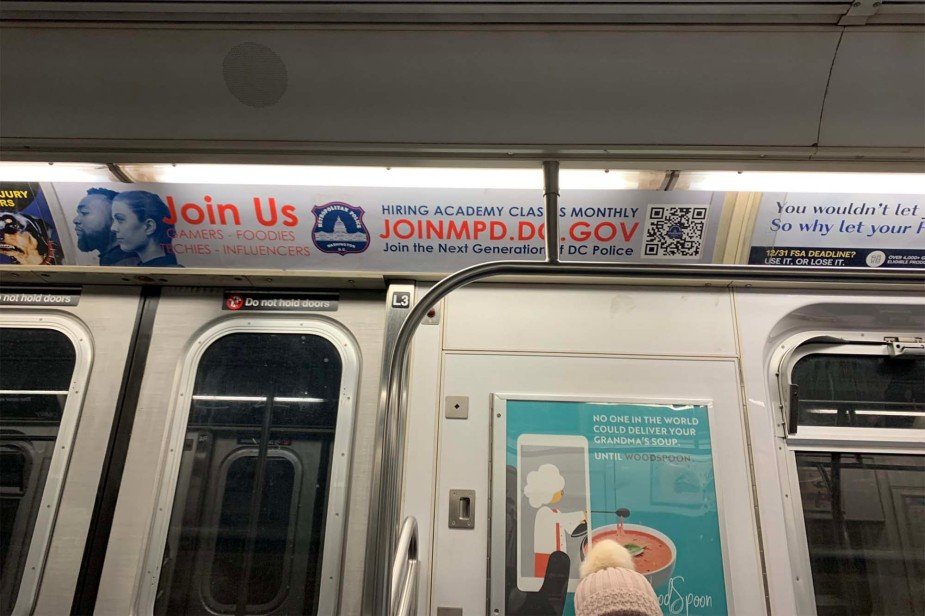
The ad calls for “gamers, foodies, techies and influencers” to join the DC police force. I guess it’s trying to create an image of the “everyman” kind of cop, and to make it seem like a fun and quirky thing to do to become a cop. This is essentially the copaganda version of “celebrities, they’re just like us!”
Anyway, abolish the police.

week 2
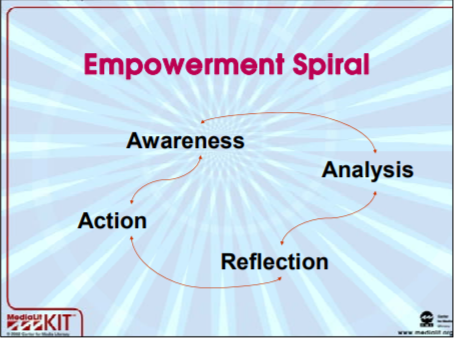
This week’s readings offered a broad lens on the field of media studies, proposing key definitions, concepts and questions, as well as important dispositions and frameworks to hold. Thoman & Jolls offer a comprehensive tool for teaching media literacy - many good questions to prompt dialogue and exploration with students! These questions are particularly useful, because the authors emphasize the centrality of inquiry/questioning and creating space for student-led discovery in the classroom.
The Jenkins reading discusses the development of the New Media Literacies initiative and underscores the importance of this field. My biggest takeaway from this excerpt was reflecting on how there are multiple kinds of literacies - literacy is referred to here as “a generalized capacity to decipher the signs and symbols of our culture”.
What I’m left thinking about with Bulger & Davidson’s article is this quote about how media literacy cannot just be about “individual’s responsibility for vetting information, but how state-sponsored disinformation efforts and our everyday technologies influence the information we see and how we interact with it”. Having this lens is essential to understanding how power functions and moves through media. I’m curious about how we successfully teach students both individual agency as well as an awareness/understanding of the power structures that dictate much of our media landscape.
This week’s readings offered a broad lens on the field of media studies, proposing key definitions, concepts and questions, as well as important dispositions and frameworks to hold. Thoman & Jolls offer a comprehensive tool for teaching media literacy - many good questions to prompt dialogue and exploration with students! These questions are particularly useful, because the authors emphasize the centrality of inquiry/questioning and creating space for student-led discovery in the classroom.
The Jenkins reading discusses the development of the New Media Literacies initiative and underscores the importance of this field. My biggest takeaway from this excerpt was reflecting on how there are multiple kinds of literacies - literacy is referred to here as “a generalized capacity to decipher the signs and symbols of our culture”.
What I’m left thinking about with Bulger & Davidson’s article is this quote about how media literacy cannot just be about “individual’s responsibility for vetting information, but how state-sponsored disinformation efforts and our everyday technologies influence the information we see and how we interact with it”. Having this lens is essential to understanding how power functions and moves through media. I’m curious about how we successfully teach students both individual agency as well as an awareness/understanding of the power structures that dictate much of our media landscape.

week 1
In the interview “Visual Culture, Everyday Life, Difference, and Visual Literacy” Nicholas Mirzoeff further articulates some of his ideas about the field/framework of visual culture, which he describes as a blending together of aspects of art historical and film critical thought with cultural studies. Visual culture addresses the myriad of ways we interface with (and are inundated with) images & media in our daily lives, moving away from just considering formal spaces of looking like the cinema or the art gallery. He calls this kind of shift the “politics of the everyday” and takes seriously the practice of “vernacular watching”.
I was particularly interested in thinking about Mirzoeff’s ideas about what visibility might mean for political action, as he writes for example that “simply making [the atrocities at Abu Ghraib] visible [...] has not had the consequences one might have expected” (p. 23). This observation made me think about the role of witnessing, and how there is an assumption that seeing violence and abuse of power will directly translate into political action. In particular, I couldn’t stop thinking about what it means to bear witness to police killings repeatedly, and how sharing/spreading/consuming these images is not necessarily in itself an act of resistance. I wonder how to effectively translate the act of witness into political motivation and action (especially at a time when there is a concurrent movement calling for police body cameras, which places the camera in the hands of the police themselves to use and abuse at their own discretion…).
Lastly, I’d be curious to talk about Mirzoeff’s notion of “disidentification”, and how we as individual viewers can try to question and challenge our own viewpoints, and “explore and negotiate the presumed normality of the West” (p. 27). I’m interested in how or if this idea of disidentification might connect to bell hook’s theory of the “oppositional gaze”.
In the interview “Visual Culture, Everyday Life, Difference, and Visual Literacy” Nicholas Mirzoeff further articulates some of his ideas about the field/framework of visual culture, which he describes as a blending together of aspects of art historical and film critical thought with cultural studies. Visual culture addresses the myriad of ways we interface with (and are inundated with) images & media in our daily lives, moving away from just considering formal spaces of looking like the cinema or the art gallery. He calls this kind of shift the “politics of the everyday” and takes seriously the practice of “vernacular watching”.
I was particularly interested in thinking about Mirzoeff’s ideas about what visibility might mean for political action, as he writes for example that “simply making [the atrocities at Abu Ghraib] visible [...] has not had the consequences one might have expected” (p. 23). This observation made me think about the role of witnessing, and how there is an assumption that seeing violence and abuse of power will directly translate into political action. In particular, I couldn’t stop thinking about what it means to bear witness to police killings repeatedly, and how sharing/spreading/consuming these images is not necessarily in itself an act of resistance. I wonder how to effectively translate the act of witness into political motivation and action (especially at a time when there is a concurrent movement calling for police body cameras, which places the camera in the hands of the police themselves to use and abuse at their own discretion…).
Lastly, I’d be curious to talk about Mirzoeff’s notion of “disidentification”, and how we as individual viewers can try to question and challenge our own viewpoints, and “explore and negotiate the presumed normality of the West” (p. 27). I’m interested in how or if this idea of disidentification might connect to bell hook’s theory of the “oppositional gaze”.